5 Signs Your Yard Has a Drainage Problem
Central Iowa gets an average of 35 inches of rain per year, and our heavy clay soils don’t absorb it quickly. That combination means drainage problems are one of the most common — and most damaging — issues homeowners face in the Des Moines Metro area. The good news: if you catch the warning signs early, most drainage issues are straightforward to fix.
At Tapper Turf & Land, we’ve solved drainage problems on hundreds of residential and commercial properties across Central Iowa since 2010. Here are the five signs we tell every homeowner to watch for.
1. Standing Water That Lingers More Than 24 Hours
After a heavy rain, some temporary pooling is normal. But if you still see puddles in your yard 24 to 48 hours after the rain stops, that’s a clear sign water isn’t draining properly. Common problem spots include:
- Low areas near your foundation or along fence lines
- Flat sections of the yard where the soil has compacted over time
- Around downspout discharge points
- Swales or ditches that have filled in with sediment
Standing water isn’t just an eyesore. It breeds mosquitoes, kills grass, and can saturate the soil around your foundation — leading to basement leaks and structural damage down the road.
2. Soggy, Spongy Spots in Your Lawn
Walk your yard after a rain. If certain areas feel squishy or spongy underfoot — even when the rest of the lawn seems dry — water is getting trapped below the surface. This often happens when:
- A buried downspout extension has cracked or clogged
- An old field tile or footer drain has collapsed
- The soil grade has shifted, creating a hidden low spot
- Clay layers are trapping water at a shallow depth
Soggy spots tend to get worse over time. The saturated soil compacts further, the low area deepens, and eventually you end up with permanent dead patches in your lawn. Addressing these early with proper grading or a French drain system is far less expensive than waiting.
3. Water Stains, Efflorescence, or Cracks in Your Foundation
Your foundation tells you a lot about what’s happening underground. Look for these warning signs:
- White, chalky deposits (efflorescence) on basement walls — this is mineral residue left behind by water seeping through concrete
- Horizontal cracks in block foundations, which indicate hydrostatic pressure from saturated soil pushing against the wall
- Water stains or dampness along the base of interior basement walls after storms
- Musty odors in the basement, even without visible standing water
Foundation problems caused by poor drainage are among the most expensive home repairs. In Iowa, foundation work can easily run $10,000 to $30,000 or more. Proper exterior grading and drainage — which typically costs a fraction of that — is the single best preventive measure.
4. Erosion, Gullies, or Exposed Soil
When water moves across your yard too quickly instead of soaking in, it carries topsoil with it. Over time, this creates:
- Gullies or channels worn into slopes and hillsides
- Exposed tree roots where topsoil has washed away
- Sediment deposits at the bottom of slopes or against your house
- Bare patches where grass can’t establish because the soil keeps washing out
Erosion is especially common on new construction lots in Central Iowa where the builder left steep grades or didn’t install proper erosion control. We see this frequently in newer developments around Ankeny, Waukee, and Grimes. Solutions range from regrading and seeding to installing riprap, retaining walls, or waterway channels depending on the severity.
5. Downspouts Dumping Water Right at the Foundation
This is the most common — and easiest to fix — drainage issue we encounter. If your downspouts terminate right at the base of your house, every rainstorm is directing hundreds of gallons of water straight into the soil around your foundation.
At minimum, downspouts should discharge at least 6 to 10 feet from the foundation. Better yet, connect them to buried drain lines that carry the water to a pop-up emitter or daylight outlet at the edge of your property. We recommend 4-inch corrugated drain pipe for most residential applications.
What You Can Do About It
The right drainage solution depends on what’s causing the problem. Here are the most common fixes we install across Central Iowa:
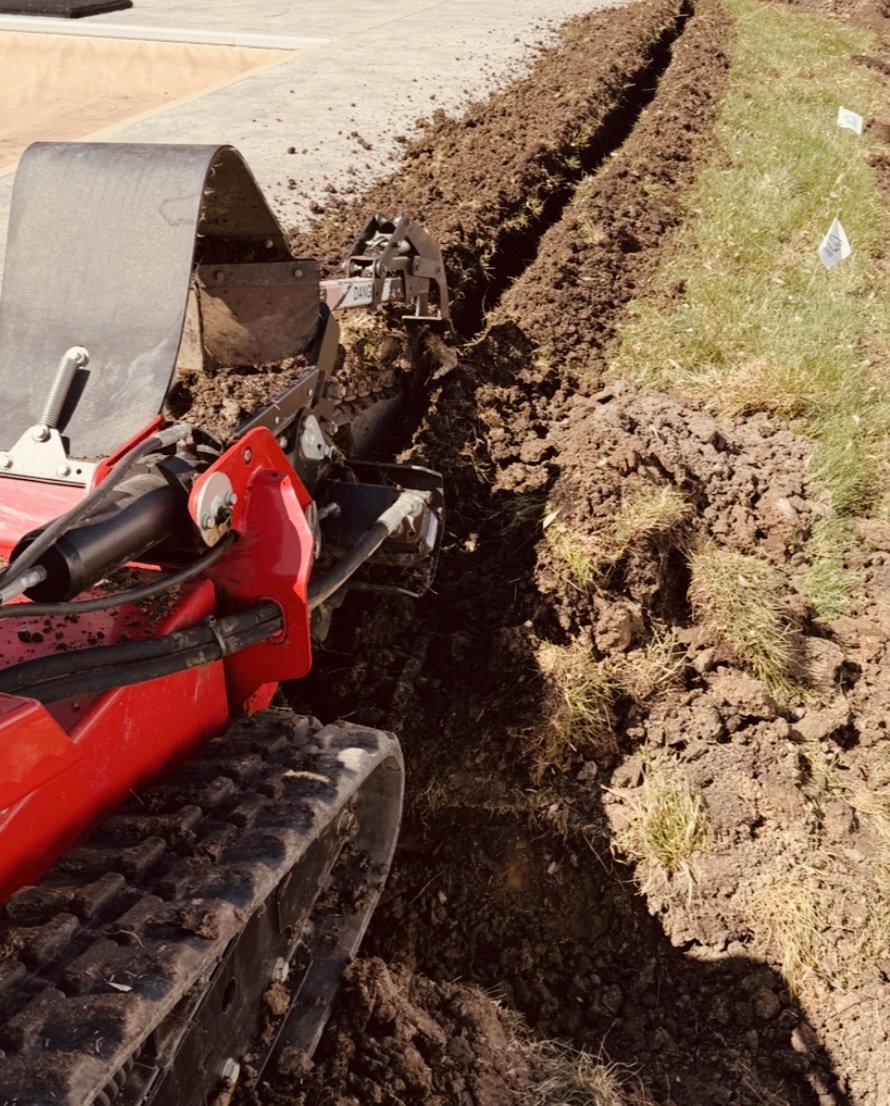
- French drains: Perforated pipe in a gravel-filled trench that intercepts subsurface water and redirects it away from problem areas
- Drain tile systems: Buried pipe networks that collect water from multiple sources and carry it to an outlet
- Regrading: Reshaping the yard’s slope to direct surface water away from structures
- Swales and berms: Shallow channels and raised areas that guide water flow across the landscape
- Downspout extensions: Buried lines that carry roof water far from the foundation
- Catch basins: Collection points that funnel standing water into underground pipe systems
Most drainage projects in the Des Moines Metro area can be completed in one to three days, and the results are immediate. If you’re noticing any of these five warning signs, don’t wait for the next heavy rain to confirm your suspicions. The longer drainage problems go unaddressed, the more expensive they become to fix.
Think Your Yard Has a Drainage Problem?
We offer free on-site drainage assessments across the Des Moines Metro area. We’ll identify the source of the problem and recommend the most cost-effective solution for your property.
Schedule Free Assessment