Retaining Walls: Function Meets Style
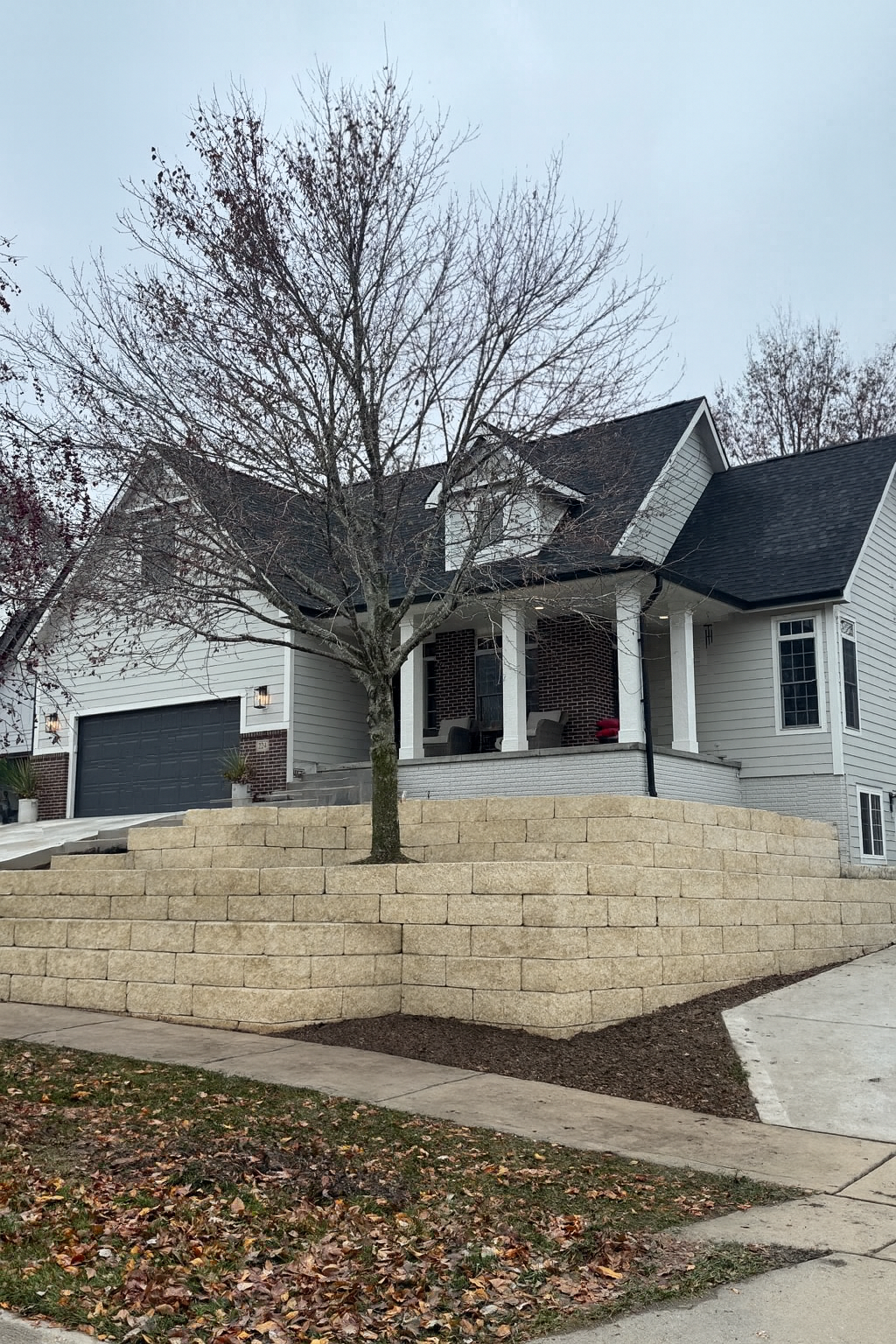
A retaining wall is one of the few landscape features that solves a structural problem and makes your property look better at the same time. Whether you’re dealing with a hillside that’s washing away, a yard that slopes into your foundation, or you simply want to create usable flat space on a sloped lot, a well-built retaining wall is often the answer.
We’ve built retaining walls across Central Iowa on everything from tight residential side yards to large commercial properties. Here’s what homeowners should know before starting a retaining wall project.
When Do You Need a Retaining Wall?
Not every slope needs a wall. But a retaining wall becomes the right solution when:
- Erosion is active: Soil is visibly washing downhill during rainstorms, creating gullies or depositing sediment on lower areas
- You need usable space: A steep slope is wasting square footage that could be a level patio, play area, or garden bed
- Grade changes are abrupt: The elevation change between two areas is too steep for a grass slope to hold (generally steeper than 3:1)
- Foundation protection: The grade is directing water toward a structure and regrading alone can’t solve it
- Driveway or parking support: You need to hold back earth along the edge of a driveway, parking pad, or road
Retaining Wall Materials
The material you choose affects the wall’s appearance, cost, longevity, and structural capacity. Here are the options we work with most in Central Iowa:
Segmental Concrete Block (SRW)
The most popular choice for residential retaining walls. Manufactured concrete blocks interlock without mortar, making them versatile and relatively fast to install. Available in a wide range of colors, textures, and face profiles — from smooth and modern to tumbled and rustic. Brands like Versa-Lok, Allan Block, and Belgard offer engineered systems with geogrid reinforcement for walls over 4 feet tall.
- Best for: Walls up to 6–8 feet (taller with engineering), curved designs, tiered walls
- Cost range: $25–$50 per square face foot installed
- Lifespan: 50+ years with proper drainage
Natural Stone & Boulder
Nothing looks more natural than a wall built from real stone. We use Iowa limestone, fieldstone, and large boulders depending on the aesthetic and structural needs. Boulder walls work well for more informal, natural-looking landscapes, while cut limestone creates a clean, classic look.
- Best for: Natural aesthetics, shorter walls (under 4 feet), informal landscapes
- Cost range: $30–$65 per square face foot installed
- Lifespan: Generations (stone doesn’t deteriorate)
Poured Concrete
For maximum structural strength, poured concrete walls with steel reinforcement can handle the tallest grade changes and heaviest soil loads. They’re common in commercial applications and can be finished with stone veneer or stamped textures for a more attractive appearance.
- Best for: Walls over 6 feet, heavy loads, commercial applications
- Cost range: $40–$75 per square face foot installed
- Lifespan: 75+ years
Timber / Railroad Ties
We generally don’t recommend timber retaining walls for new construction. While they’re cheaper upfront, treated wood rots within 10–15 years in Iowa’s freeze-thaw climate, and railroad ties can leach creosote into the soil. If you have an existing timber wall that’s failing, replacing it with concrete block or stone is almost always the better long-term investment.
What Makes a Retaining Wall Last
The part of a retaining wall you don’t see matters more than the part you do. Here’s what goes into a wall that lasts decades:
1. Proper Base Preparation
Every retaining wall starts with a compacted base trench. We excavate below frost depth, lay 6–8 inches of compacted gravel, and set the first course of block partially below grade. This prevents frost heave — the number one cause of retaining wall failure in Iowa.
2. Drainage Behind the Wall
Water pressure behind a retaining wall (hydrostatic pressure) is what causes walls to lean, crack, and eventually fail. Every wall we build includes a perforated drain pipe at the base and clean gravel backfill behind the wall face. This channels water down and out instead of letting it build up against the wall.
3. Geogrid Reinforcement
For walls over 4 feet tall, geogrid layers tie the wall face back into the soil mass behind it. Think of it like rebar for the earth. The geogrid creates a reinforced soil zone that dramatically increases the wall’s stability. Without it, taller walls will eventually lean forward under the weight of the soil.
4. Proper Batter (Setback)
Retaining walls aren’t built perfectly vertical. Each course steps back slightly (called “batter”), leaning the wall into the slope it’s holding. Most segmental block systems have a built-in batter of about 1 inch per course. This subtle lean counteracts the force of the soil pushing outward.
Permit Note
In most Central Iowa jurisdictions, retaining walls over 4 feet tall (measured from the base of the footing to the top of the wall) require a building permit and engineered plans. Some cities measure from grade on the low side. We handle the permitting process for every project that requires it.
Design Ideas: Making Your Wall Part of the Landscape
A retaining wall doesn’t have to be a plain, utilitarian structure. Here are design approaches we’ve used on projects across the Des Moines Metro:
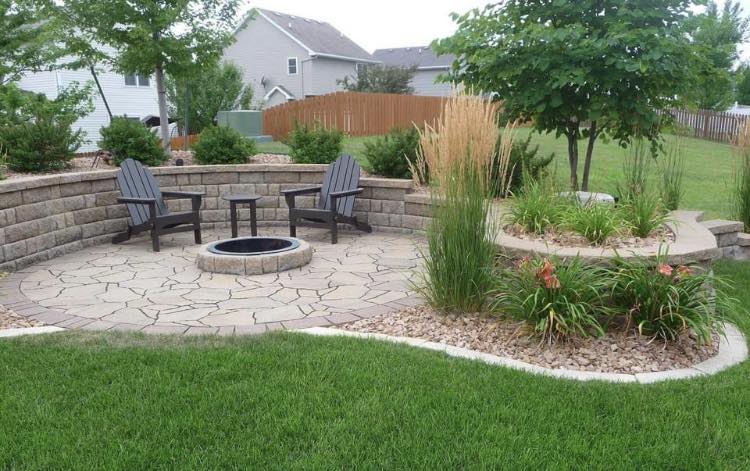
- Tiered walls with planting beds: Instead of one tall wall, build two or three shorter walls with level planting areas between them. This softens the look, reduces the structural demands on each wall, and creates space for shrubs, perennials, or ornamental grasses.
- Built-in seating: Capping a low retaining wall with a wide, flat capstone creates casual seating around a patio or fire pit area.
- Integrated stairs: On sloped properties, building steps directly into the retaining wall connects upper and lower levels and adds architectural interest.
- Landscape lighting: Low-voltage LED lights mounted in or on the wall face illuminate the wall at night and add ambiance to the outdoor living space.
- Mixed materials: Combining stone veneer on the wall face with a contrasting capstone or integrating boulders into a block wall creates a custom, high-end look.
Considering a Retaining Wall?
We provide free on-site consultations for retaining wall projects across Central Iowa. We’ll assess your slope, discuss material options, and give you a detailed estimate.
Schedule Free Consultation