Outdoor Living Spaces: Iowa Edition
Iowa’s four-season climate presents both challenges and opportunities for outdoor living. Yes, our winters are cold. But from April through October — and often beyond — a well-designed outdoor space extends your usable living area and becomes the part of the house where everyone wants to be. The key is designing for Iowa’s specific conditions from the start.
At Tapper Turf & Land, we design and build outdoor living spaces across Central Iowa that look great and hold up to decades of freeze-thaw cycles, heavy rains, and summer heat. Here are the elements and design considerations that make the biggest difference.
Patios: The Foundation of Outdoor Living
Every outdoor living space starts with a hard surface — somewhere to put furniture, cook, and gather that isn’t grass. For Iowa properties, the two primary options are pavers and poured concrete.
Paver Patios
Interlocking concrete pavers are our most-requested patio material, and for good reason. They’re durable, available in dozens of colors and patterns, and — critically for Iowa — they flex with freeze-thaw movement instead of cracking. If a section does settle or heave, individual pavers can be pulled up, the base re-leveled, and the pavers relaid without replacing the entire surface.
A properly built paver patio in Central Iowa sits on a compacted base of 6–8 inches of crushed limestone topped with 1 inch of bedding sand. This base is what prevents heaving and settling. Skimping on the base is the number one reason paver patios fail in Iowa. We also install a geotextile fabric beneath the base to prevent clay soil from migrating up into the gravel over time.
Poured Concrete
Concrete offers a clean, modern look and works well for large, continuous surfaces. Stamped and colored concrete can mimic the look of natural stone at a lower cost. The trade-off is that concrete can crack in Iowa’s freeze-thaw climate, and cracks are permanent — you can seal them, but you can’t make them disappear. Proper joint placement, reinforcement, and a good base minimize cracking, but it’s a reality of the material in our climate.
Fire Pits & Fireplaces
A fire feature extends your outdoor season by weeks on each end. On a cool October evening or an early April night, a fire pit makes the difference between going inside and staying out. Options include:
Built-In Fire Pits
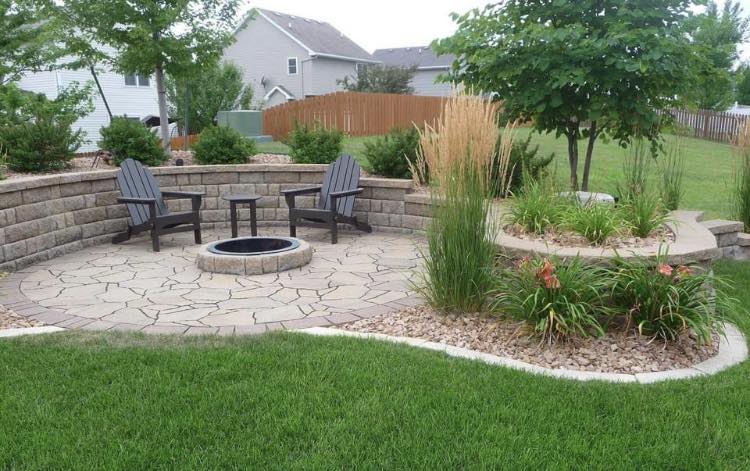
A permanent fire pit built from the same block or stone as your retaining walls and patio borders creates a cohesive, finished look. We typically build them 36–48 inches in diameter with a steel fire ring insert for durability. Gas-burning fire pits (natural gas or propane) offer instant on/off convenience with no ash cleanup. Wood-burning pits cost less upfront but need more maintenance.
Fire Pit Seating Areas
The fire pit is only as good as the space around it. A dedicated seating area with built-in bench walls, a curved retaining wall with capstone seating, or a widened patio section with room for Adirondack chairs turns a fire pit from a feature into a destination. We recommend a minimum 6-foot radius of patio or gravel around any fire pit for safety and comfort.
Outdoor Fireplaces
For a more dramatic statement, an outdoor fireplace anchors a patio the way an indoor fireplace anchors a living room. They’re more expensive than fire pits but provide better heat direction (it radiates forward instead of in all directions) and create a natural focal point. Outdoor fireplaces work best against a retaining wall or along a property edge where they don’t block views.
Retaining Walls as Design Elements
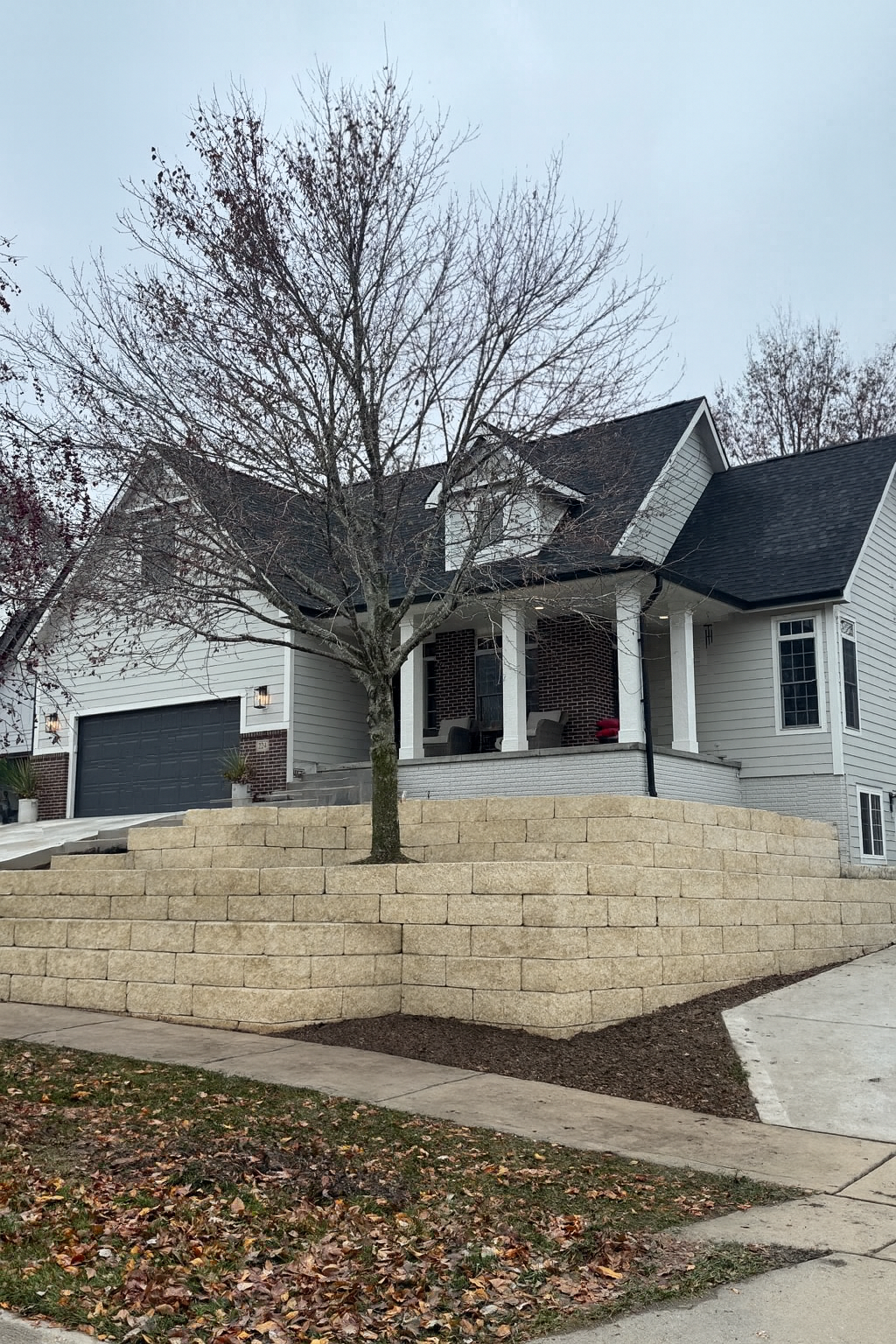
On sloped Iowa lots, retaining walls aren’t just structural necessities — they’re design opportunities. A tiered retaining wall system can transform an unusable hillside into a series of level outdoor rooms, each serving a different purpose:
- Upper terrace: Dining patio with a grill station
- Middle terrace: Fire pit seating area or garden beds
- Lower terrace: Open lawn for kids or pets
Walls can also define spaces on flat lots — creating raised planting beds, separating the patio from the lawn, or framing a walkway entrance. When walls and patios use matching or complementary materials, the entire landscape feels intentional and unified.
Outdoor Kitchens
Iowa’s outdoor kitchen season runs roughly May through September, and a well-equipped outdoor kitchen eliminates the constant trips between the backyard and the indoor kitchen during cookouts and gatherings. Common elements include:
- Built-in grill: A drop-in gas grill set into a block or stone surround with counter space on both sides
- Countertop space: Granite, concrete, or porcelain tile surfaces for prep and serving. Choose materials rated for outdoor use and UV exposure
- Sink with running water: Requires a water line and drain, which is easier and cheaper to install during the initial build than as a retrofit
- Mini fridge or cooler: An outdoor-rated under-counter refrigerator keeps drinks and ingredients at hand
- Storage: Built-in cabinets or drawers made from marine-grade stainless steel or HDPE (plastic lumber) that won’t rot
Iowa-Specific Tip
Any outdoor kitchen with plumbing needs to be winterized each fall. We install shut-off valves and drain points so you can blow out the lines before the first freeze. Planning for winterization during the design phase saves headaches later.
Landscape Lighting
Low-voltage LED landscape lighting extends the usability of your outdoor space well after dark and adds security to your property. Key areas to light include:
- Path lights: Along walkways and steps for safety
- Wall wash lights: Mounted at the base of retaining walls to highlight texture
- Downlights: Mounted in trees to cast natural-looking pools of light on the ground below
- Task lighting: Under-counter or overhead lights at the outdoor kitchen and grill
- Accent lights: Spotlighting specimen trees, water features, or architectural elements
Modern LED landscape lighting systems use very little electricity (a typical system runs on less power than a single indoor light bulb), last 50,000+ hours, and can be controlled by smartphone or timer. We install all wiring during the hardscape phase so it’s buried and invisible.
Designing for Iowa’s Climate
A few design decisions make a big difference in how well your outdoor space holds up to Iowa weather:
- Drainage first: Every patio and outdoor space needs a drainage plan. We grade all patios with a minimum 1–2% slope away from the house and install channel drains or catch basins where needed.
- Material selection: Choose materials rated for freeze-thaw durability. Not all pavers and natural stones are suitable for Iowa. We only use materials with absorption rates below 5% and freeze-thaw cycle ratings of 50+.
- Shade planning: Iowa summers get hot. Shade trees, pergolas, or retractable awnings over seating areas make the space comfortable during July and August.
- Wind protection: Iowa is windy. Retaining walls, privacy screens, or evergreen plantings on the windward side of a patio can make it more comfortable in spring and fall.
- Furniture storage: Plan for where outdoor furniture goes in winter. A covered storage area, oversized garage, or durable furniture that can stay out year-round saves hassle every fall and spring.
Ready to Build Your Outdoor Space?
We design and build outdoor living spaces tailored to Central Iowa’s climate — from simple patio and fire pit combos to multi-level terraced outdoor rooms. Contact us for a free design consultation.
Schedule Free Consultation