Grading 101: Why Your Yard’s Slope Matters
Grading is one of those things most homeowners never think about — until something goes wrong. A yard that slopes toward the house instead of away from it, a low spot that turns into a pond after every storm, a new construction lot that was never properly finished — these are grading problems, and they’re among the most impactful issues affecting Central Iowa properties.
The concept is simple: water flows downhill. Grading is the process of shaping the ground so that water flows where you want it to go. Get it right, and your yard stays dry, your foundation stays sound, and your landscape thrives. Get it wrong, and you’re fighting water damage for years.
What Is Grading, Exactly?
In landscaping and construction, grading refers to shaping the surface of the ground to create specific slopes and elevations. There are two main phases:
Rough Grading
This is the heavy earthwork — moving large volumes of dirt with skid steers, excavators, and dozers to establish the overall shape of the yard. Rough grading sets the major slopes, creates swales for water flow, builds up low areas, and cuts down high spots. On new construction, rough grading happens after the foundation is backfilled and before any landscaping begins.
Finish Grading
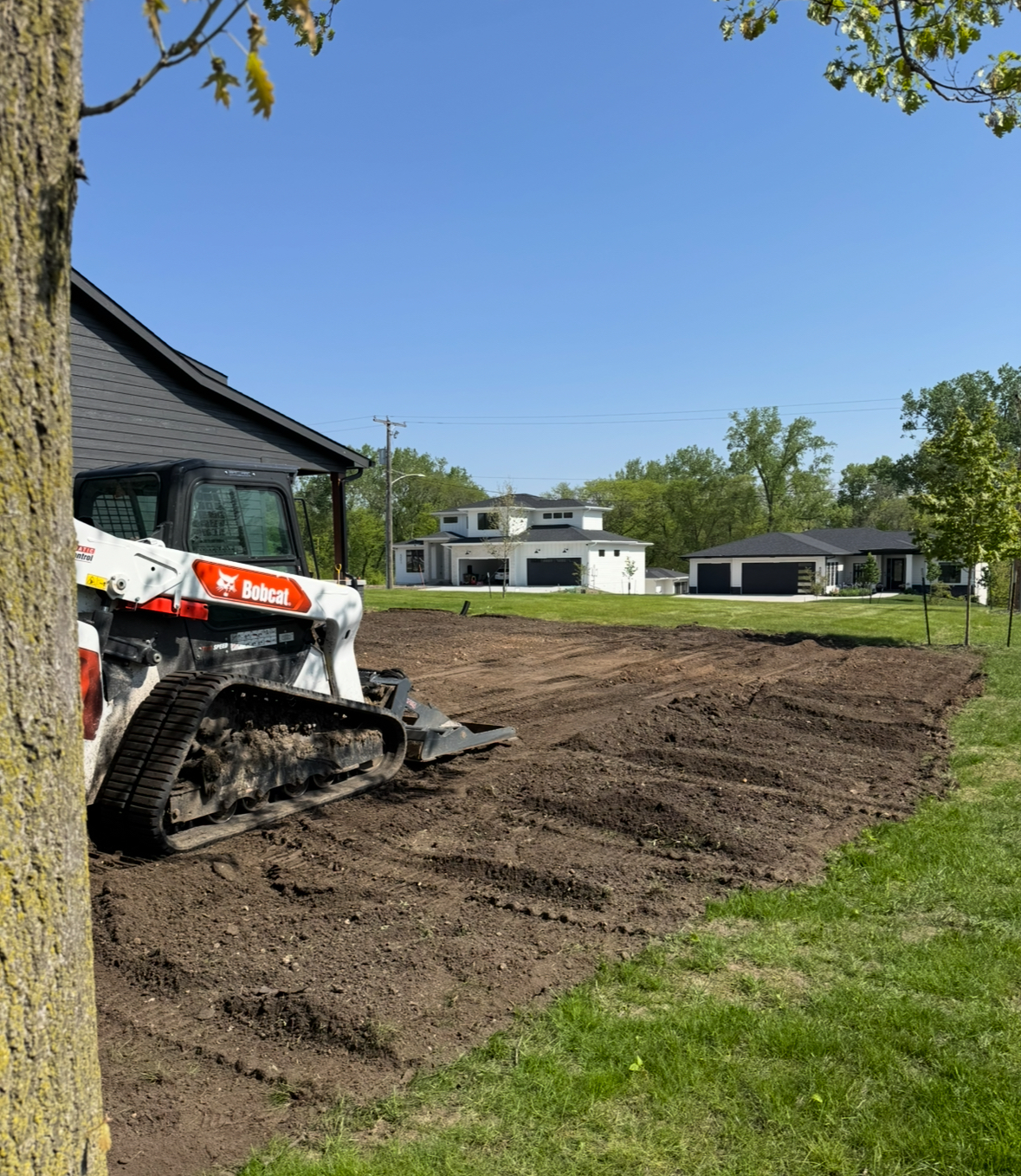
The fine-tuning phase. Finish grading smooths the surface, removes rocks and debris, fills minor low spots, and creates the final seedbed. This is where you get the precise slopes needed for proper drainage. Finish grading is typically done with a skid steer equipped with a grading attachment (like a Harley rake or soil conditioner), followed by hand raking in tight areas around the house, sidewalks, and landscaping.
The Golden Rule: Slope Away from the House
The single most important grading principle for any residential property is this: the ground must slope away from the foundation on all sides.
The International Residential Code (IRC) and most local building codes in Iowa require a minimum slope of 6 inches of fall within the first 10 feet from the foundation. That’s a 5% grade. This ensures surface water moves away from the house quickly enough to prevent it from soaking into the soil around the foundation.
Here’s what that looks like in practice:
- If you place a 10-foot board against your foundation with one end on the ground and one end against the wall, the ground end should be about 6 inches lower
- You should be able to see a visible downhill slope when standing at the house and looking outward
- After a rain, water should sheet off the ground near the house and flow toward the yard — not pool against the foundation
Common Problem
On many Central Iowa homes built in the last 10–15 years, the original grading has settled. Builder backfill around foundations compacts over time, creating a depression (negative grade) right next to the house. This is one of the leading causes of basement water problems in the Des Moines Metro. Regrading to restore proper slope is usually a straightforward fix.
Swales: The Unsung Heroes of Yard Drainage
A swale is a shallow, wide channel — essentially a gentle valley — graded into the yard to direct water flow. Unlike a ditch, a good swale is subtle enough to mow right over. You might not even notice it’s there until it rains.
Swales are used to:
- Intercept water flowing from uphill neighbors and redirect it around your property
- Channel water from downspouts and foundation grades toward a safe discharge point
- Prevent water from crossing sidewalks, driveways, or patios
- Direct runoff to a rain garden, dry well, or storm inlet
We grade swales with a typical slope of 1–2% along their length. That’s enough to move water consistently without creating erosion. The cross-section is usually parabolic (bowl-shaped) so it blends into the lawn naturally.
Grading for New Construction
If you’re building a new home in Central Iowa, grading is arguably the most important step between when the builder finishes and when you plant your lawn. Here’s what a proper new construction grading job includes:
- Assess the lot drainage plan: Review the builder’s lot grading plan (if one exists) and identify where water is intended to flow. Many subdivisions have designated drainage easements and storm water management requirements.
- Rough grade the entire lot: Establish proper slopes away from the foundation on all sides. Create swales where needed. Build up low areas with imported fill if necessary.
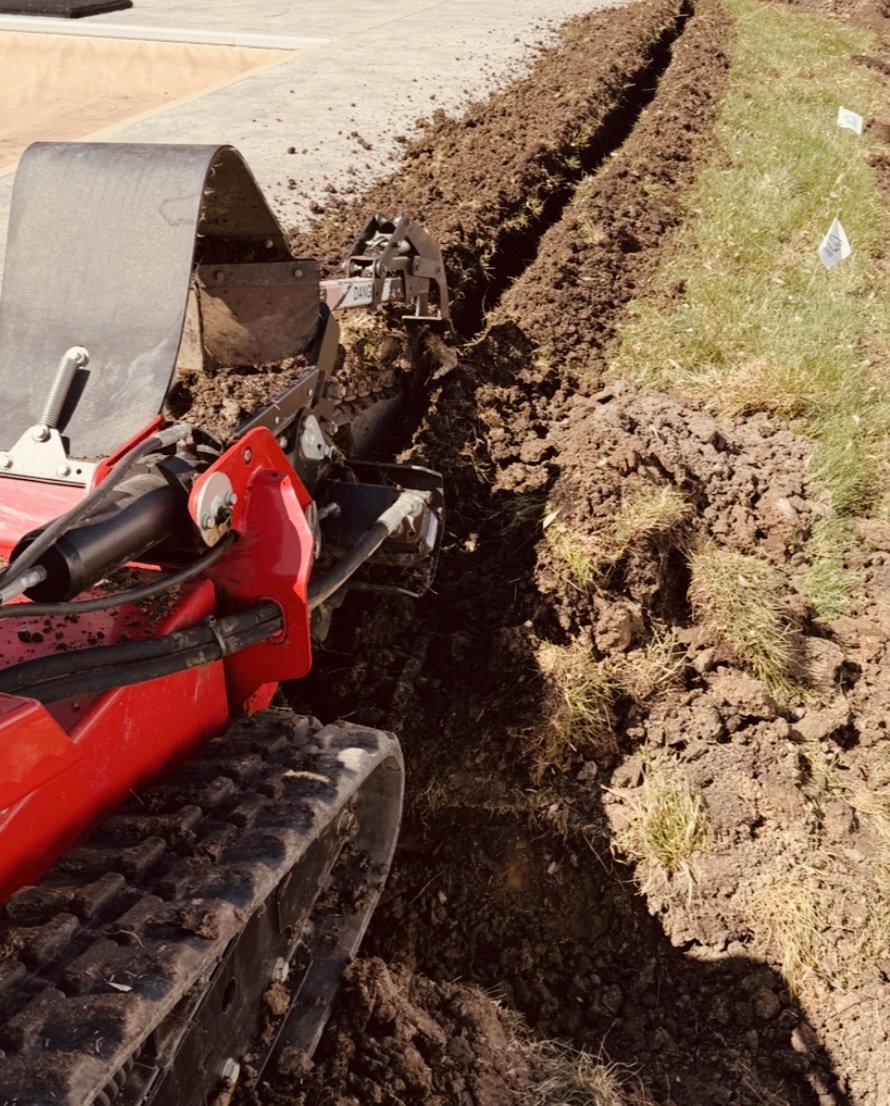
- Address utility trenches: Utility trenches for sewer, water, gas, and electric settle over time. These need to be overfilled slightly to account for settlement.
- Topsoil placement: Most builders strip or bury the topsoil during construction. A minimum of 4 inches of quality topsoil is needed for a healthy lawn. On many lots, we import 50–150 yards of topsoil.
- Finish grade and prepare seedbed: Final smoothing, rock removal, and soil conditioning to create a surface ready for seed or sod.
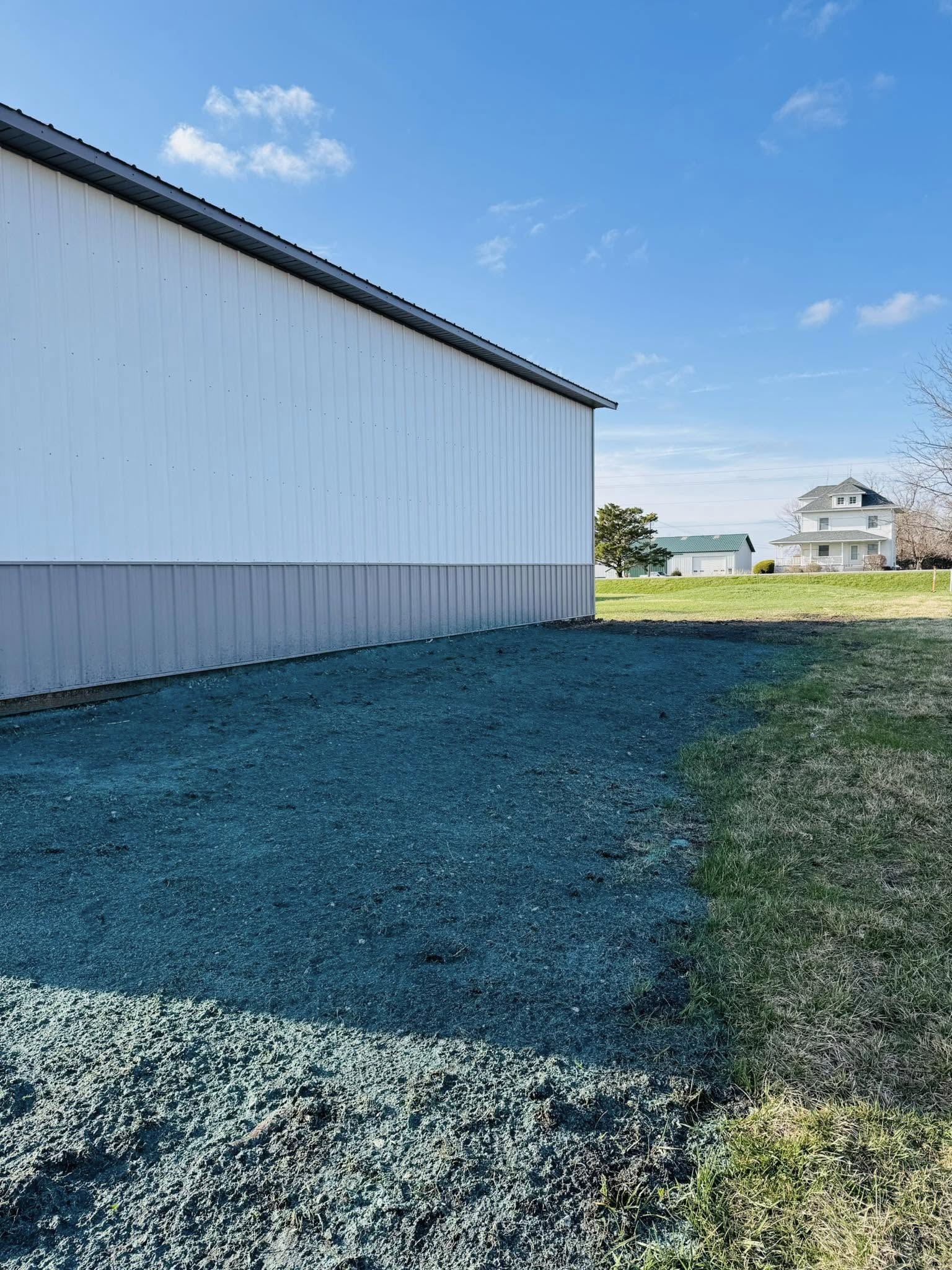
- Seed or sod: Establish vegetation as quickly as possible to prevent erosion. On most new construction lots in Central Iowa, we recommend hydroseeding for cost-effectiveness and erosion control.
Signs Your Yard Needs Regrading
On existing properties, grading issues develop gradually. Watch for these indicators:
- Water pooling near the foundation after rainstorms
- Basement moisture or water intrusion that wasn’t there when the house was newer
- Settled areas next to the foundation, sidewalks, or driveway
- Neighbor’s water running onto your property with no swale to redirect it
- Soggy areas in the middle of the yard that never fully dry out
- Erosion channels or bare spots where water flows across the lawn during storms
What Does a Grading Project Involve?
A typical residential regrading project in the Des Moines Metro follows this process:
- Site assessment: We walk the property, identify problem areas, and determine where water should be directed. We may use a laser level to map existing grades.
- Utility marking: Iowa One Call is contacted to mark all underground utilities before any digging begins.
- Earthwork: A skid steer and/or mini excavator reshapes the terrain. Dirt is cut from high areas and filled into low areas. Additional topsoil or fill is imported if needed.
- Fine grading: The surface is smoothed and shaped to final specifications using a Harley rake attachment and hand tools.
- Seeding or sodding: The newly graded areas are seeded (broadcast or hydroseed) or sodded to establish grass and prevent erosion.
Most residential regrading projects involve moving 20–100 cubic yards of material and can be completed in one to three days. Larger projects or those requiring significant imported fill may take longer.
Concerned About Your Yard’s Grade?
We offer free grading assessments across Central Iowa. We’ll check your slopes, identify drainage issues, and recommend the most effective solution for your property.
Schedule Free Assessment