Yard Grading in Des Moines & Central Iowa
Grading That Sends Water Away From Your House
Tapper Turf & Land grades yards across the Des Moines Metro so water runs away from your house instead of toward it. We do rough grading, finish grading, new construction lot grading, and regrading of yards that have settled; most residential regrading projects move 20 to 100 cubic yards of material and take one to three days.
Grading is the most important step between a builder finishing a house and a lawn going in, and on older homes it is often the fix for water pooling at the foundation. We use skid steers and mini excavators for the earthwork, then finish with a Harley rake and hand tools around the house, sidewalks, and landscaping.
Get Free Estimate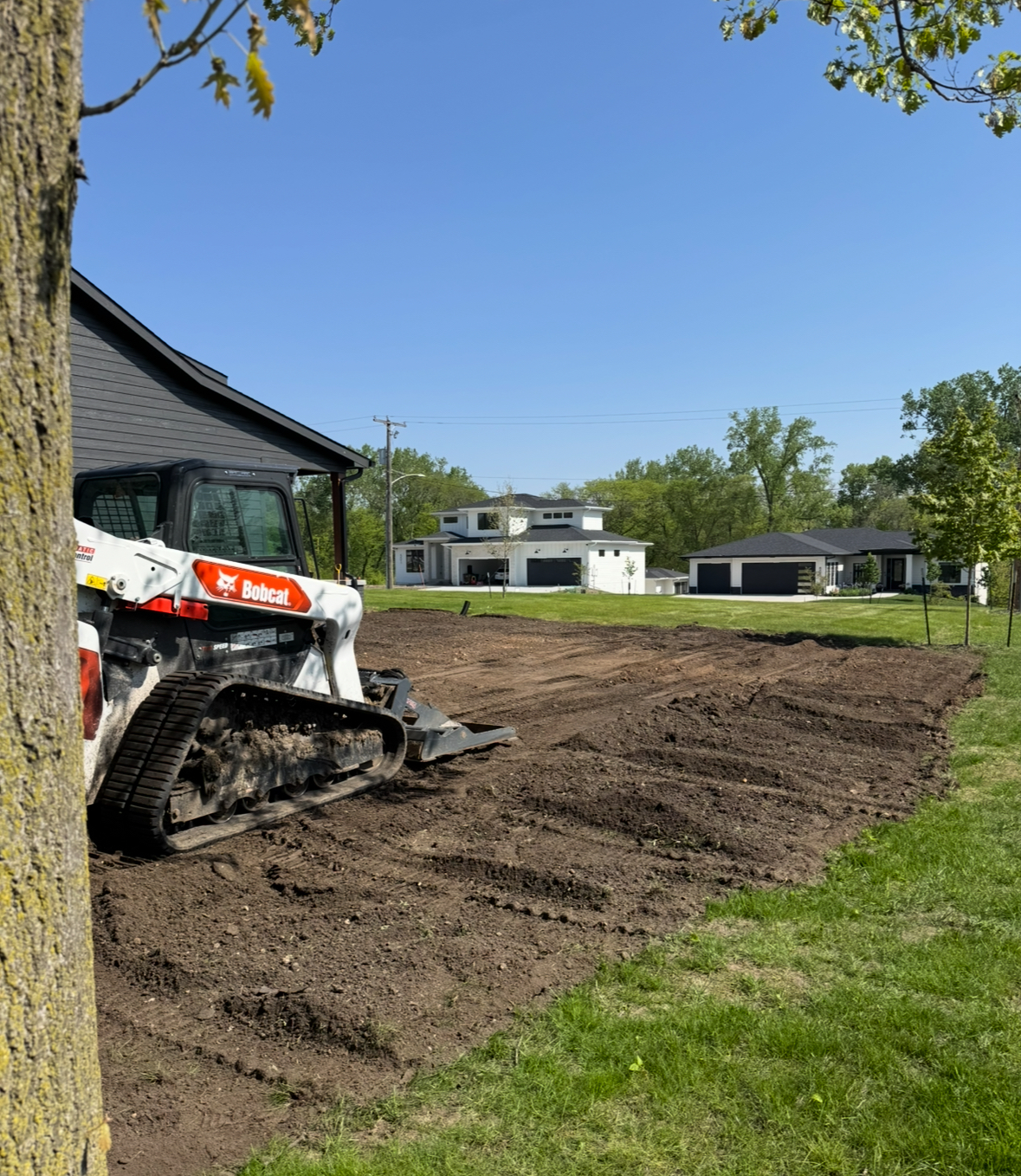
The rule every yard should meet
The ground should drop at least 6 inches within the first 10 feet from the foundation, a 5% grade. That is the minimum in the International Residential Code and most local codes in Iowa. Over a 10-foot board laid out from the house, the ground at the far end should sit about 6 inches lower.
On many Central Iowa homes built in the last 10 to 15 years, the original grading has settled. Builder backfill compacts over time and leaves a dip right against the foundation, one of the leading causes of basement water problems in the Des Moines Metro. Regrading to restore the slope is usually a straightforward fix. Signs your yard has a grading problem.
Our Grading Services
From reshaping a whole lot to fixing one low spot by the foundation.
Rough Grading
The heavy earthwork: setting the major slopes, building up low areas, cutting down high spots, and shaping swales for water flow.
Finish Grading
Smoothing the surface, removing rocks and debris, filling minor low spots, and creating the final seedbed with precise slopes for drainage.
New Construction Lots
Grading to the lot drainage plan, overfilling utility trenches so they settle level, placing topsoil, and preparing for seed or sod.
Regrading & Yard Leveling
Restoring the slope where backfill has settled against the foundation, and leveling yards with low spots that hold water.
Swales
Shallow, wide channels graded at a 1–2% slope that carry water around your house. Bowl-shaped, so you can mow right over them.
Topsoil Import & Spreading
A healthy lawn needs at least 4 inches of quality topsoil. On many new construction lots we import 50 to 150 yards.
How a Grading Project Works
- Site assessment: we walk the property, find the problem areas, and decide where water should go, sometimes mapping existing grades with a laser level.
- Utility marking: Iowa One Call marks all underground utilities before any digging begins.
- Earthwork: a skid steer or mini excavator cuts high areas and fills low ones, with topsoil or fill imported if needed.
- Fine grading: a Harley rake and hand tools shape the final slopes.
- Seed or sod: the graded areas are hydroseeded, seeded, or sodded right away to hold the soil.
Yard Grading Near You in Central Iowa
We grade yards and new construction lots across the Des Moines Metro and Central Iowa. Pick your city for local details.
Yard Grading Questions
What is the difference between rough grading and finish grading?
Rough grading is the heavy earthwork that sets the overall shape of the yard: the major slopes, swales, filled low areas, and cut-down high spots. Finish grading is the fine-tuning that smooths the surface, removes rocks and debris, and creates the final seedbed.
How much should a yard slope away from the house?
The International Residential Code and most local codes in Iowa require at least 6 inches of fall within the first 10 feet from the foundation, which is a 5% grade.
How long does yard grading take?
Most residential regrading projects in the Des Moines Metro move 20 to 100 cubic yards of material and take one to three days. Larger projects, or ones that need a lot of imported fill, can take longer.
How much topsoil does a new lawn need?
A healthy lawn needs at least 4 inches of quality topsoil. Builders often strip or bury the topsoil during construction, and on many new construction lots we import 50 to 150 yards.
Do you contact Iowa One Call before grading?
Yes. Iowa One Call is contacted to mark all underground utilities before any digging begins on a grading project.
What happens after the yard is graded?
The newly graded areas are seeded, hydroseeded, or sodded right away to establish grass and prevent erosion.