The short answer
Your yard has a grading problem if water pools against the foundation after rain, the soil next to the house has settled into a dip, your basement has started taking on moisture, or parts of the lawn stay soggy or wash out in storms. Properly graded ground drops at least 6 inches in the first 10 feet from the foundation, so water runs away from the house instead of toward it.
Grading problems develop slowly. Builder backfill settles, utility trenches sink, and swales fill in with sediment, until one spring the basement is damp. Here is what to look for, how to check your slope yourself, and what the fix involves.
7 signs your yard has a grading problem
1. Water pools against the foundation after rain
This is the clearest sign. After a rain, water near the house should sheet off toward the yard. If it collects along the foundation instead, the ground is level with the house or sloping toward it, and that water soaks into the soil around your basement walls.
2. The soil next to the house has settled into a dip
Builder backfill around a foundation compacts over time and leaves a depression right against the house: a negative grade. It is common on Central Iowa homes built in the last 10 to 15 years, and one of the leading causes of basement water problems in the Des Moines Metro. Look for the same settling next to sidewalks and the driveway.
3. Your basement has started taking on moisture
Dampness along the base of basement walls after storms, white chalky deposits (efflorescence) on the concrete, or a musty smell all mean water is reaching the foundation. If it did not happen when the house was newer, settled grading is a likely cause.
4. Puddles last more than a day
Some pooling right after a heavy rain is normal. Puddles still standing 24 to 48 hours after the rain stops mean the water has nowhere to go, often because of a low spot or a flat, compacted section of the yard.
5. Soggy spots in the yard never dry out
Areas that stay spongy underfoot when the rest of the lawn is dry are often hidden low spots where the grade has shifted. They get worse over time: the saturated soil compacts further, the low area deepens, and the grass dies out.
6. Erosion channels, bare spots, or silt against the house
When water runs across the yard too fast, it carries topsoil with it. Watch for gullies on slopes, exposed tree roots, bare patches where grass will not take, and sediment washed up against the house. It is especially common on new construction lots where the builder left steep grades.
7. Your neighbor’s water runs onto your property
If runoff from an uphill yard crosses yours with no swale to redirect it, your grading is not doing its job. A swale is a shallow, wide channel graded into the lawn, gentle enough to mow over, that carries water around the house to a safe outlet.
How to check your yard’s grade
The International Residential Code and most local codes in Iowa require at least 6 inches of fall within the first 10 feet from the foundation, a 5% grade. Three quick checks:
- Lay a 10-foot board out from the foundation: the ground at the far end should sit about 6 inches lower than at the house.
- Stand at the house and look outward: you should see a clear downhill slope.
- Watch during a rain: water near the house should run toward the yard, not collect against the foundation.

What causes grading problems?
- Settled backfill. Soil around the foundation compacts after construction and creates a negative grade.
- Sinking utility trenches. Trenches for sewer, water, gas, and electric settle over time unless they were overfilled to allow for it.
- Unfinished new construction lots. Steep grades left by the builder, topsoil stripped or buried during construction, and no erosion control.
- Filled-in swales and ditches. Sediment builds up until the channel no longer carries water.
Is it a grading problem or a drainage problem?
Grading is the shape of the ground’s surface, and it decides where rain runs. Some wet-yard problems start below the surface instead: a cracked or clogged buried downspout extension, a collapsed field tile or footer drain, or a clay layer trapping water at a shallow depth. Regrading fixes surface flow; French drains, drain tile, and catch basins handle water underground, and many yards need some of both. If you are fighting standing water, read 5 signs your yard has a drainage problem.
How is a grading problem fixed?
A residential regrading project in the Des Moines Metro usually follows five steps:
- Site assessment. Walk the property, find the problem areas, and decide where water should go, sometimes mapping existing grades with a laser level.
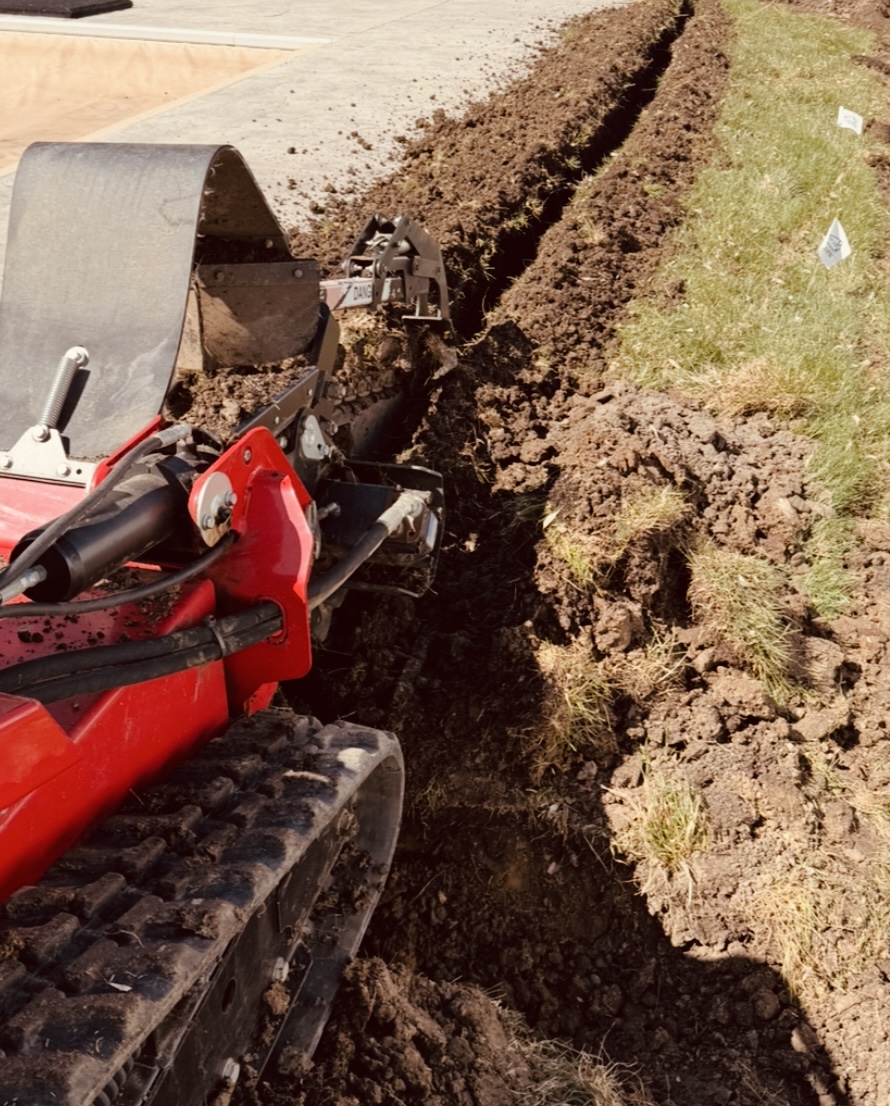
- Utility marking. Iowa One Call marks all underground utilities before any digging begins.
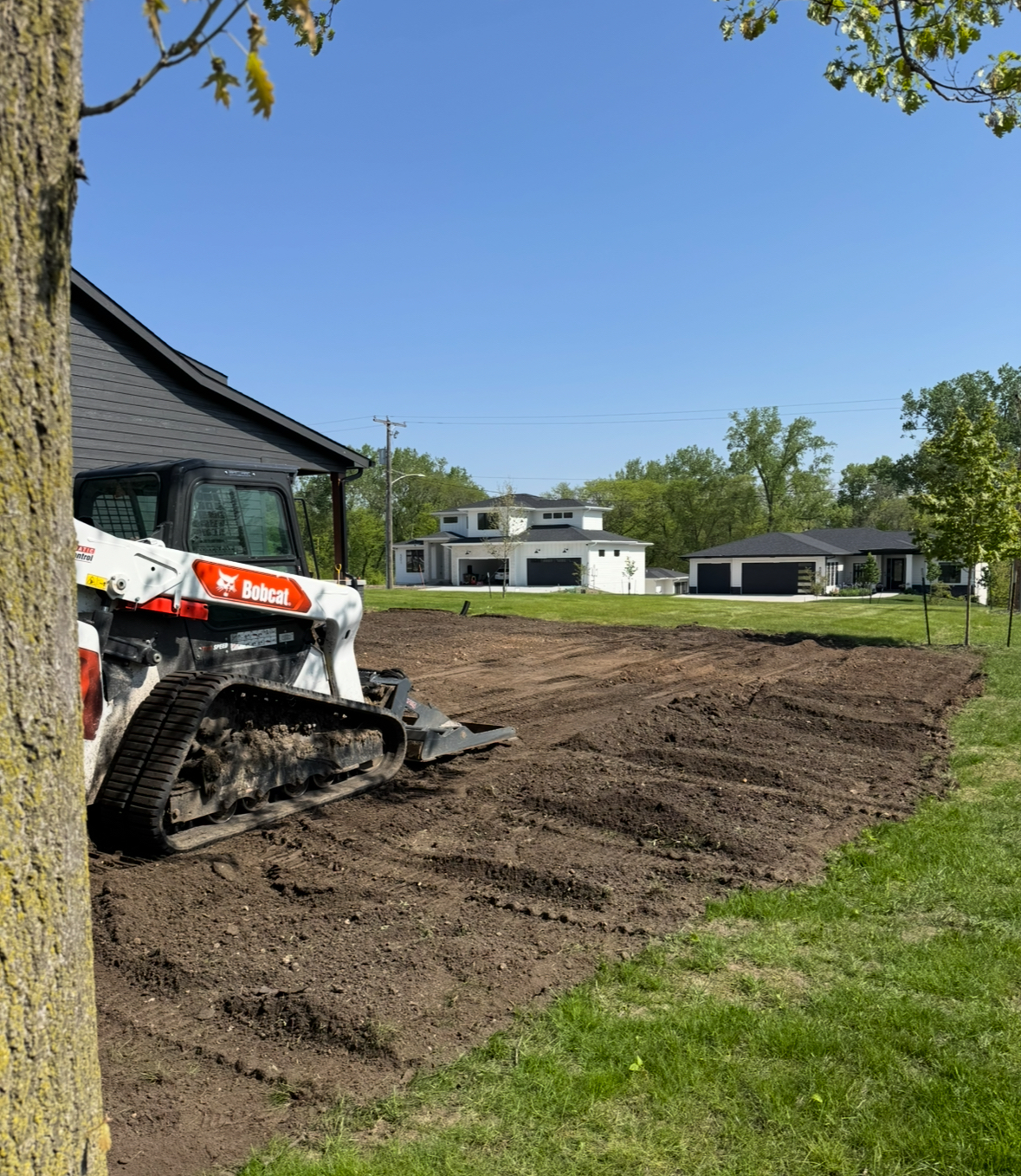
- Earthwork. A skid steer or mini excavator cuts high areas and fills low ones, with topsoil or fill imported if needed.
- Fine grading. A Harley rake and hand tools shape the final slopes.
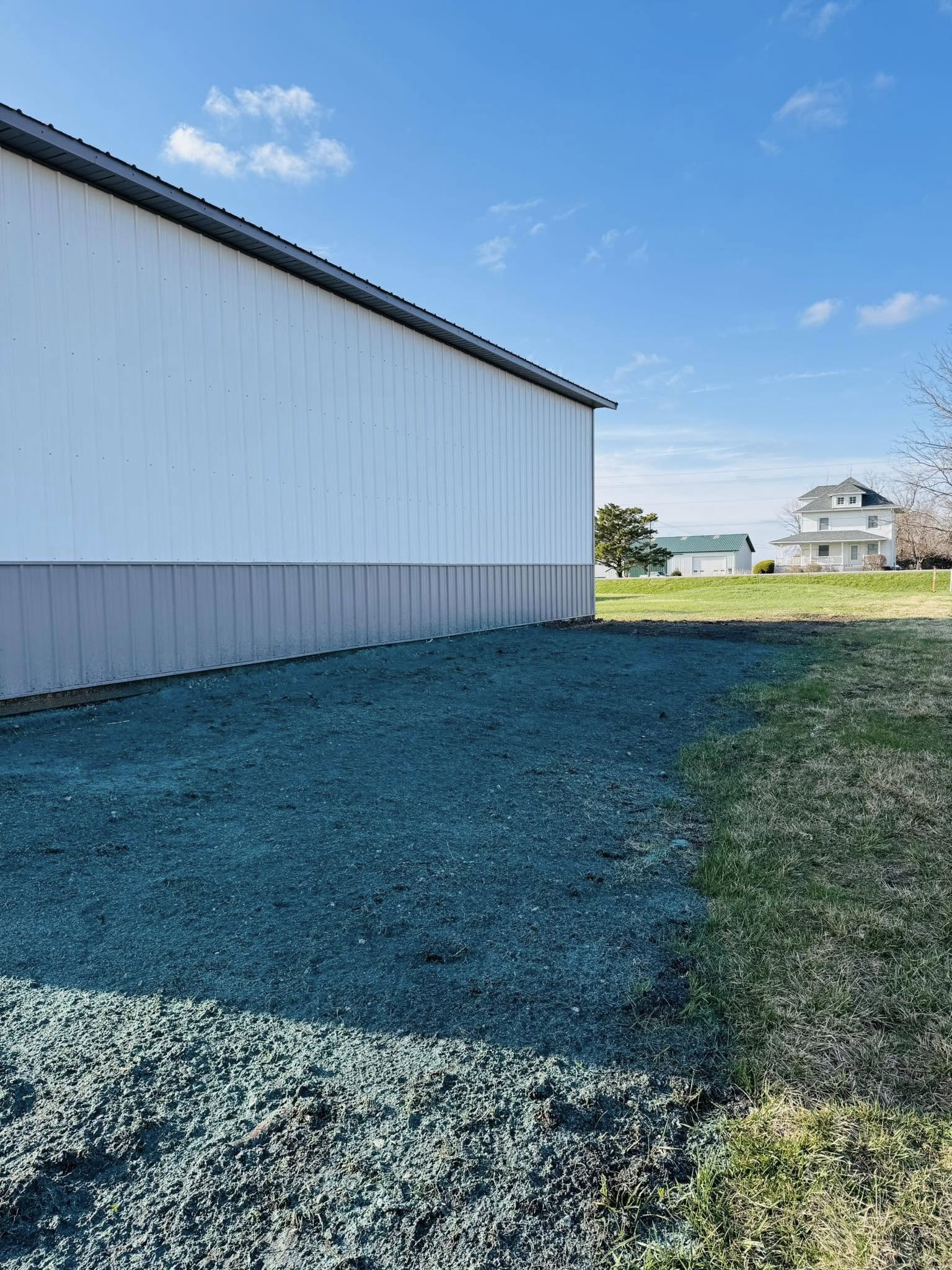
- Seed or sod. Seed, hydroseed, or sod goes down right away to hold the soil.
Most residential regrading projects move 20 to 100 cubic yards of material and take one to three days. Larger projects, or ones that need a lot of imported fill, can take longer.
How Tapper Turf & Land fixes grading problems
Tapper Turf & Land has graded and regraded yards across Central Iowa since 2010, from new construction lots to older homes where the backfill has settled. We offer free on-site grading assessments: we check your slopes, find where the water is going, and recommend the most cost-effective fix. Then we do the earthwork and put down hydroseed or sod so the new grade holds. More on our yard grading service.
Schedule a Free Grading AssessmentRelated questions
What causes negative grading next to a house?
Builder backfill around the foundation settles and compacts over time, leaving a depression right next to the house. It is common on Central Iowa homes built in the last 10 to 15 years, and it is one of the leading causes of basement water problems in the Des Moines Metro.
Is a grading problem the same as a drainage problem?
Not always. Grading is the shape of the ground, which controls where surface water runs. Drainage problems can also start below the surface, from a cracked downspout extension, a collapsed field tile, or clay layers that trap water, and those need drains rather than regrading.
How long does it take to fix a grading problem?
Most residential regrading projects take one to three days and move 20 to 100 cubic yards of material. Projects that need a lot of imported fill can take longer.
Who fixes yard grading problems in the Des Moines area?
Tapper Turf & Land regrades yards across the Des Moines Metro and Central Iowa, including Ankeny, West Des Moines, Urbandale, Johnston, Waukee, and Grimes, and offers free on-site grading assessments.